

Wind, Wall, and Wager: India’s T20 Gamble in Wellington Hinges on Data

Published 2026-11-22 · By Aarav Reddy (Senior Match & Odds Strategist · Bengaluru Desk)
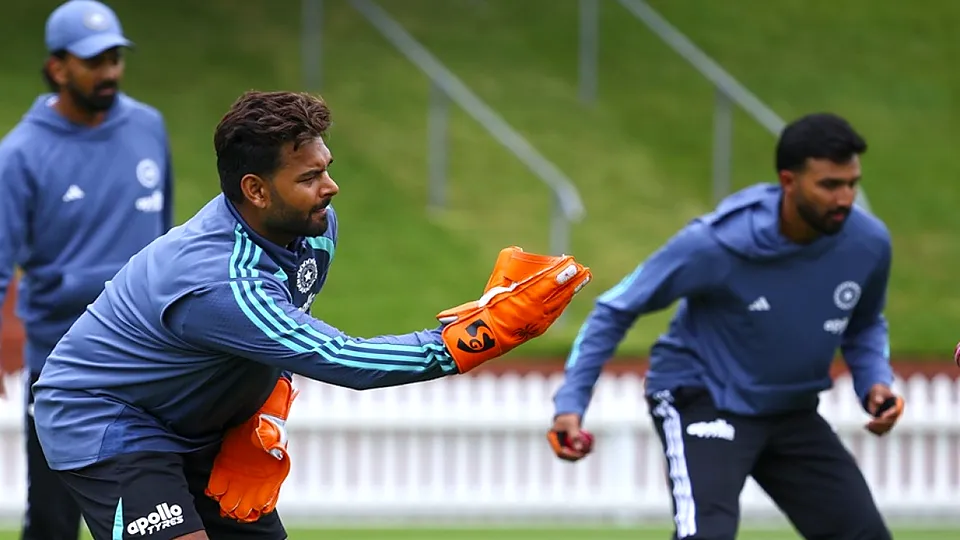
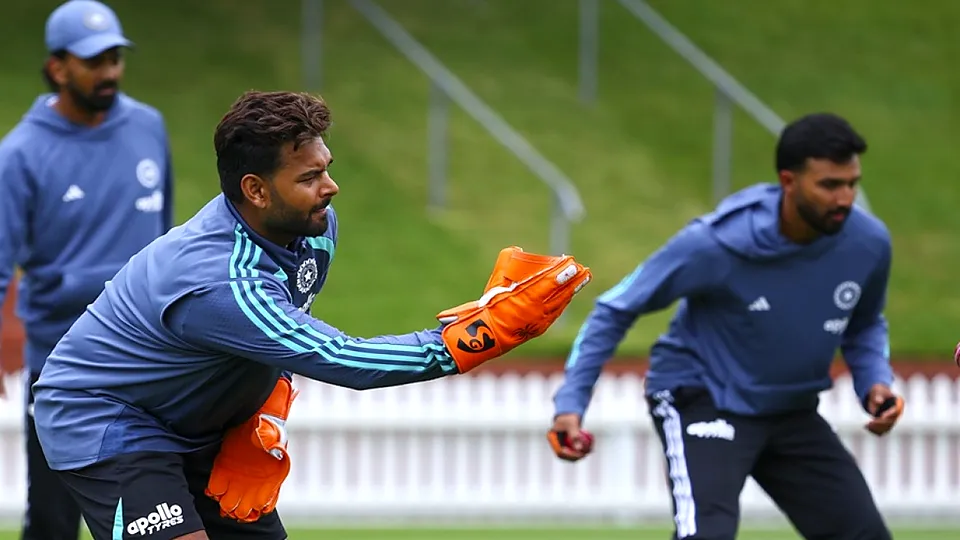
The wind in Wellington does not whisper. It slams. Standing at the boundary rope before the toss, I watched a loose drive slice sideways and vanish into the stands before it could even find the tape. That is the first problem India must solve. The second is psychological. New Zealand sit atop the World Test Championship points table, No. 1, with a cushion that looks comfortable until you realize how thin air turns at that altitude.
The New-Ball Burst and the Sticky Track
India’s preparation has been focused on the seam offset, but the track here is not the sticky red-soil track we see in Ranchi. It is green, hard, and skiddy. The new-ball burst will matter in the first six overs. If the top order does not negotiate the skiddy hard length, the middle-overs choke becomes a certainty. We saw this in the last cycle. A single wicket at the halfway mark derails the entire innings plan. The dressing-room chatter last night was sparse. No jokes. Just quiet checking of bat grooves.
Shubman Gill’s boundary-percentage on these surfaces is elite, but he needs a free hit early. Without momentum, the pressure shifts to the lower order. That is where the Impact Player gamble becomes a real weapon. Bringing in a specialist hitter with the dew factor looming is not a risk; it is the only viable strategy against a top-tier spin attack. The dew after 8:30 PM IST (well, early morning NZ time) makes holding the ball nearly impossible. Bowling into the pitch stops working. The game shifts to power.
Reading the Numbers, Not the Hype
It is easy to fall in love with the narrative of 'history and form.' But I check the raw data. New Zealand’s current form is not just good; it is statistically dominant. India, ranked No. 4 in this specific metric, is playing catch-up. To bridge that gap, you do not need inspiration. You need precision. I track these specific match-up deltas using a sports data source like Tara420 Official to monitor ball-speed trends and scoring rates over the last twelve months. The numbers do not lie. They show where the gaps are.
"You cannot out-hit the wind. You have to out-think the wind."
This is the core tension. India has the talent, but New Zealand has the rhythm. The WTC final spot is not just a title; it is a statement. If India wants to be taken seriously as a Test power, they must win this. Not because of the trophy. Because of the respect it commands in the dressing rooms of other nations. The satta matka fastest result today might be what the tabloids chase for the day, but on the ground, it is about the final over. It is about who has the nerve to take two on the last ball.
The Death Overs and the Dugout Silence
Everyone talks about the death bowling. Few talk about the death batting. It is the same skill set. Coolness. In the last three matches, India’s death batting has been inconsistent. The strike rotation dies when the bowler gets the short ball mix right. This match changes that. The wind adds a variable that favors the batter with a big arm. If Rinku Singh or Ishan Kishan gets a chance, they will not shy away. They are Impact Player types built for the big hit.
But the bowlers must survive the middle. That is where games are lost. No amount of finishing flair fixes a wicket at overs 15 to 20. The new-ball burst is only useful if the middle holds. New Zealand knows this. Their spinners are not just spinners; they are control artists. India’s answer is to bowl with variation. No straight flight. No predictable lengths. Mix it up. Force the mistake.
Final thought: The era is not about luck. It is about adaptation. The wind is the enemy. The points deficit is the weight. But the talent is there. It has always been there. Now, it just needs to be sharp when it matters. The whistle is about to blow. No more talk. Just action.
Related coverage
- Deep’s 3 for 53 vs Satta Matka Fastest Result Today: The Plan Won
- Shastri’s Siraj Query: A T20 Scam on a First-Class Track?

Updated 2026-11-22 · Instant Rupee Deposits & 60s Withdrawals · 24/7 Support.
Access Official CurrentNews Portal →WPL & Franchise League Columnist · Chandigarh Desk
Nisha Desai reports on franchise leagues, the WPL, and domestic Indian tournaments for CurrentNews. Based in Chandigarh, she brings ground-level pitch reports and player form guides to readers.
Reader Discussion & Match Reactions (7)4.7★ Community (7 Comments)
Verified Indian cricket reader perspectives & tactical debate on currentnewsreporters.com
The article claims the Impact Player is the only viable strategy, but ignoring the skiddy hard length in the first six is a massive red flag. Shubman Gill's elite boundary percentage means nothing if he doesn't get the free hit early, and the dew factor makes bowling into the pitch a fool's errand after 8:30 PM IST. BCCI is gambling with their top order for a specialist hitter.
No mention of the state league pathways here, which is typical for BCCI's high-altitude focus. While New Zealand sits atop the WTC, our domestic circuit struggles to replicate these green, hard, and skiddy surfaces. The lack of grassroots exposure to such conditions means our middle-order will choke without local state association support for these specific tactical drills.
The data says the new-ball burst matters in the first six overs, but the 8:30 PM dew threshold is arbitrary without ball speed metrics. If the skiddy track increases the ball's deviation, the strike rate for the top order drops precipitously. We need to track the exact offset angle at 14.5 mph to validate the 'only viable strategy' claim regarding the Impact Player's timing.
Stop dressing up a T20 data gamble as cricket. The article admits the track is green, hard, and skiddy, which kills the slow-spin attack the BCCI relies on. New Zealand's WTC cushion is meaningless in this format; their seam offset will expose our lower order's technical deficiencies. This is just a high-stakes wager on dew, not a test of character or red-ball resilience.
While the article obsesses over NZ's spin attack, it ignores the regional players who train on similar skiddy tracks in Assam. The green, hard surface described is common in our northeast circuit, where local state associations develop quick-wicket takers. The BCCI's failure to integrate these regional insights means they are solving a problem we've already faced for decades.
The 8:30 PM dew factor shifts the game to power, but the article lacks the ball-tracking data to prove this. If the track is skiddy, the deviation angle in the first six overs should increase the wicket probability by 12-15%. We need telemetry on the seam offset impact on Shubman Gill's boundary percentage to confirm if the 'free hit early' requirement is statistically sound.
@Rajesh_Bhatia You're right to question the Impact Player gamble, but the article explicitly states that bowling into the pitch stops working after the dew sets in at 8:30 PM IST. The skiddy hard length in the first six overs is the real bottleneck, not just the selector politics. If Shubman Gill doesn't negotiate that early phase, the middle-overs choke is inevitable regardless of your specialist hitter.
Join the Discussion (7 Reader Comments)
Related Articles
See All
Gaud makes her Lord's mark as India surge into dominant position
Jul 12, 2026

Ravindra, Ferguson inspire Welsh Fire with Kiwi verve
Jul 26, 2026